Berthon UK
(Lymington, Hampshire - UK)
Sue Grant
sue.grant@berthon.co.uk
0044 (0)1590 679 222
Berthon Scandinavia
(Henån, Sweden)
Magnus Kullberg
magnus.kullberg@berthonscandinavia.se
0046 304 694 000
Berthon Spain
(Palma de Mallorca, Spain)
Simon Turner
simon.turner@berthoninternational.com
0034 639 701 234
Berthon USA
(Rhode Island, USA)
Jennifer Stewart
jennifer.stewart@berthonusa.com
001 401 846 8404
July 31st, 2026
– BuzzSprout
– Spotify
– Apple
– YouTube
– iHeart (US Only)
Modern yacht design has never been more sophisticated. Naval architects have access to CFD (Computational Fluid Dynamics), velocity prediction software and simulation tools capable of modelling hull performance with remarkable accuracy. Yet, after a lifetime designing and cruising some of the world’s most capable offshore yachts, Steve Dashew still believes there is one lesson no computer can teach.
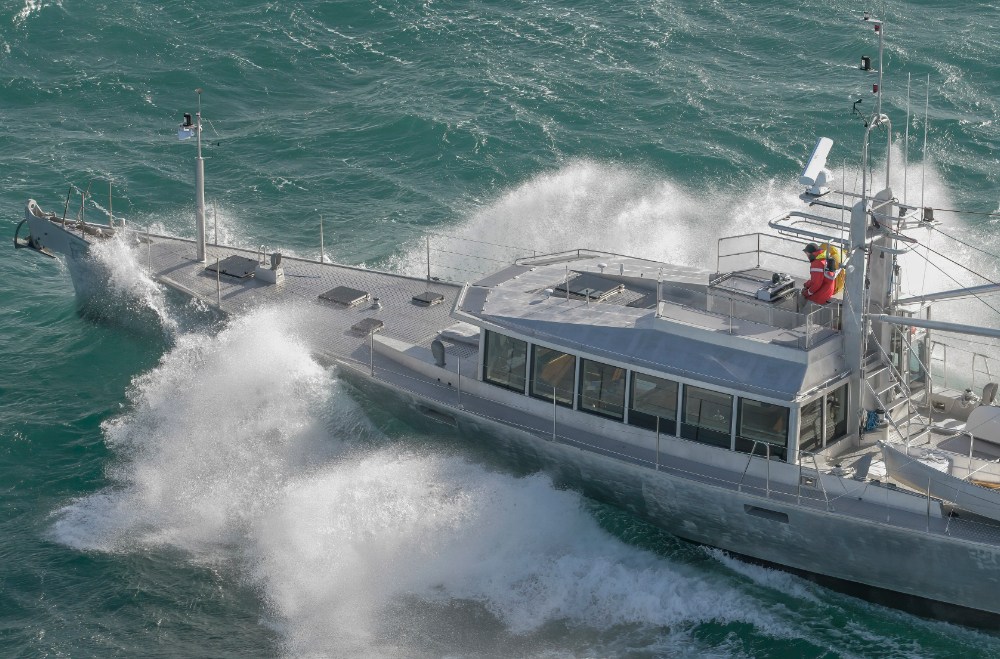
In our latest Berthon Podcast episode, Sue Grant sits down with Steve to explore the thinking behind FPB 83, WIND HORSE. While the yacht itself changed the direction of offshore powerboat design, one of the most compelling parts of the conversation is Steve’s philosophy on how great boats are actually created.
Steve has never shied away from technology. Long before computer modelling became commonplace, he was already using velocity prediction programs and embracing new engineering tools wherever they could improve his understanding of yacht design.
But throughout the conversation, he makes it clear that software is only one part of the process.
“You really don’t know until you get the boat in the water in a confused sea state.”
That simple observation became one of the driving forces behind WIND HORSE. The calculations suggested the concept would work, but Steve never intended to rely solely on theory. The real test would come offshore, where changing weather, crossing seas and long passages would reveal strengths and weaknesses that no simulation could fully predict.
Most yachts are designed to avoid heavy weather.
Steve wanted to understand it.
Following the launch of WIND HORSE, he and Linda deliberately sought out the confused sea states that expose weaknesses in both boats and crews. The goal was never to prove critics wrong. It was to learn.
The experience transformed Steve’s understanding of offshore cruising. After decades of sailing large yachts, he found himself passing through conditions that would once have demanded constant sail changes and difficult decisions.
“It was the most astonishing feeling when we went through that first squall, and we realised, there’s nothing to do.”
For Steve, that moment confirmed something far more important than a successful sea trial. It demonstrated that reducing workload could be just as valuable as increasing performance.
Another recurring theme throughout the discussion is Steve’s belief that simplicity almost always leads to better offshore boats.
Rather than filling yachts with increasingly complicated systems, he argues that designers should focus on accessibility, reliability and ease of maintenance. Boats spend their lives in harsh environments, and owners need to be able to inspect and understand the systems that keep them moving safely across oceans.
“If you have good access, then you can check things.”
It’s a deceptively simple idea. Small faults are identified before they become major failures, routine maintenance becomes easier, and owners gain confidence in their boats because nothing is hidden behind inaccessible panels or unnecessary complexity.
For Steve, simplicity isn’t about having less. It’s about making every component work harder and every decision serve a practical purpose.
One of the most refreshing aspects of the conversation is Steve’s willingness to question his own assumptions.
Despite decades of experience and countless successful designs, he never speaks as someone who believes he has finished learning. Instead, every passage becomes another opportunity to observe, refine and improve.
Even after WIND HORSE exceeded expectations, Steve resisted drawing conclusions too quickly. He wanted more miles, more weather and more experience before deciding what should come next.
That curiosity ultimately led to the FPB fleet that followed.
Towards the end of the conversation, Steve reflects on the balance between engineering and instinct.
The technical data matters. The calculations matter. Modern software has transformed yacht design.
But none of those things can replace judgement earned through years at sea.
“The final decisions are always made by feel.”
It’s a fitting conclusion to a conversation that isn’t simply about one remarkable yacht. It’s about the mindset behind it, and why experience, curiosity and a willingness to test ideas remain at the heart of great offshore design.
If you’re interested in offshore cruising, yacht design or the thinking behind the FPB fleet, this episode offers fascinating insights into one of the most influential designers of the modern era.
Listen now on your preferred podcast platform.
Contact fpb@berthon.co.uk.