Berthon UK
(Lymington, Hampshire - UK)
Sue Grant
sue.grant@berthon.co.uk
0044 (0)1590 679 222
Berthon Scandinavia
(Henån, Sweden)
Magnus Kullberg
magnus.kullberg@berthonscandinavia.se
0046 304 694 000
Berthon Spain
(Palma de Mallorca, Spain)
Simon Turner
simon.turner@berthoninternational.com
0034 639 701 234
Berthon USA
(Rhode Island, USA)
Jennifer Stewart
jennifer.stewart@berthonusa.com
001 401 846 8404
August 19th, 2026
– BuzzSprout
– Spotify
– Apple
– YouTube
– iHeart (US Only)
“Your flag is the operating system of your yacht. It’s the rulebook. It’s how it’s got to operate.” Duncan Swanson, Co-founder, Oceanskies
Originally highlighted in our latest Market Report, the changes to UK yacht registration generated significant interest from owners across Europe. In this follow-up article, and the accompanying Berthon Podcast with Oceanskies, we take a closer look at what has changed, who is affected, and the practical options now available.
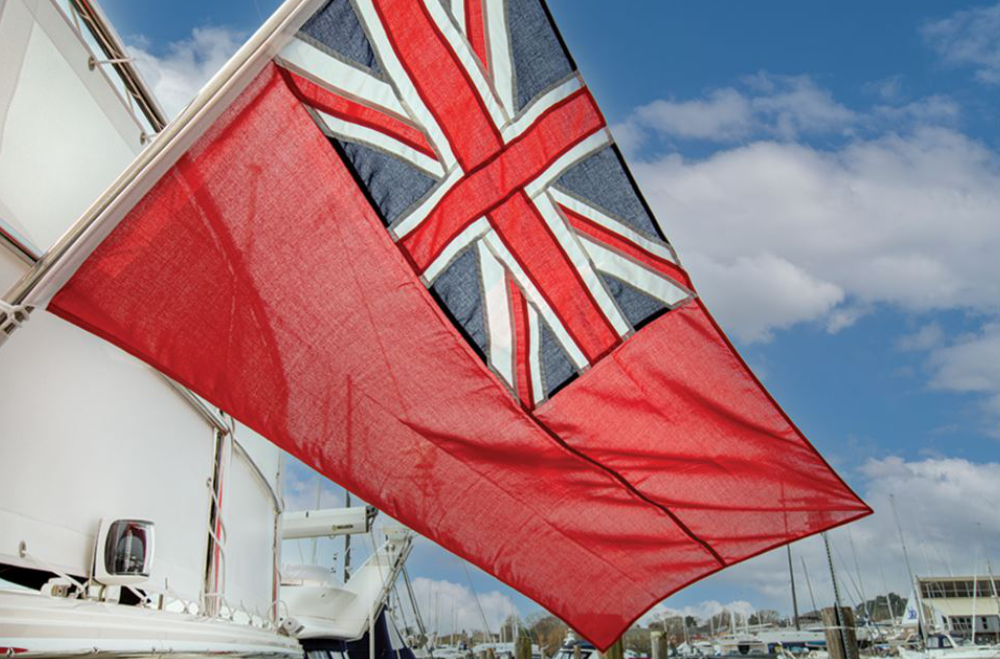
For many yacht owners, registration is little more than another piece of paperwork, filed away alongside insurance documents, Bills of Sale and VAT records until it is time for renewal or the yacht changes hands. In reality, it is one of the most important legal foundations of yacht ownership, determining a vessel’s nationality, the laws under which it operates and, in many cases, influencing finance, insurance and international cruising.
Recent changes to UK registration eligibility have brought the subject firmly back into focus.
Following post-Brexit legislative changes, European Union citizens living outside the United Kingdom can no longer apply for or renew UK Part 1 Registration in their own name. Unsurprisingly, the announcement has prompted questions across the yachting community. Can owners still fly the British Red Ensign? Does it affect existing registrations? What alternatives are available?
In the latest Berthon Podcast, Ben Cooper is joined by Duncan Swanson, Co-founder of Oceanskies, and Tom Ruff, Yacht Registration Manager and Head of Port Agency, to explain what has changed, who is affected and, perhaps most importantly, why there is no reason to panic.
The obvious question is why a yacht needs to be registered at all.
Tom Ruff offers perhaps the clearest explanation of the entire discussion.
“A good way to think of a registration for a yacht is like a passport for us when we all travel internationally.”
Just as a passport identifies a person, a Certificate of Registry identifies a yacht. It records the vessel’s nationality, ownership and legal identity, allowing customs authorities, harbour officials and insurers around the world to recognise it.
Registration is also a legal requirement for yachts operating internationally. As Tom explains: “It’s a legal requirement… customs authorities, ports around the world will expect to see that on arrival.”
Without recognised registration, a yacht can effectively become stateless, creating unnecessary complications when entering foreign ports and operating outside the accepted framework of international maritime law.
Many owners assume the obvious choice is simply to register under the flag of their own nationality. In practice, choosing a flag state is a much broader operational decision.
As Duncan Swanson explains: “Your flag is the operating system of your yacht. It’s a bit like choosing Windows or Mac. It’s the rulebook. It’s how it’s got to operate.”
Every registry has its own legal framework, eligibility rules and administrative requirements. Some are better suited to commercial operation, others to private ownership or particular ownership structures. The best choice depends not simply on where an owner lives, but on how the yacht will be used throughout its life.
That is one reason Berthon works closely with specialist registration experts such as Oceanskies. Registration rules continue to evolve, particularly following Brexit, and expert guidance helps owners choose the most appropriate solution for their circumstances.
While eligibility rules have changed, the reputation of the British Register of Ships has not.
For generations, the British Red Ensign has been recognised internationally for its high standards and strong legal framework. Britain’s maritime heritage, together with London’s position as a global centre for marine insurance, finance and maritime law, has helped establish the UK register as one of the most respected in the world.
As Duncan explains: “It’s always been very well regarded… Britain’s seafaring maritime history… London has always been a centre of marine law and insurance.”
That reputation benefits owners throughout the lifetime of a yacht, from financing and insurance through to eventual resale.
One area that often causes confusion is the difference between UK Part 1 Registration and the Small Ships Register (SSR).
Although both allow a yacht to fly the British Red Ensign, they serve very different purposes.
The SSR is a simple, low-cost register designed primarily for privately owned pleasure craft. It provides proof of nationality and is suitable for many owners cruising around the UK and neighbouring waters.
Part 1 Registration is considerably more comprehensive. It is a full title register that requires owners to provide evidence of ownership, supporting documentation and, where required, a tonnage survey. In return, it provides stronger legal protection and a recognised record of title.
As Tom explains: “You can register as an individual or with a company… you can register mortgages… and it’s proving ownership in the vessel.”
For larger or higher-value yachts, these additional protections can be invaluable. Mortgages can be recorded against the vessel, ownership is independently verified and future buyers have greater confidence in the yacht’s documented history.
Duncan highlights another important advantage.
“When you come to sell the boat, your buyer is probably going to request what’s called a Transcript of Registry.”
That transcript provides an official record of the yacht’s ownership and any registered mortgages, helping to reassure buyers and finance providers that there are no unexpected legal issues attached to the vessel.
By comparison, the SSR was never intended to provide that level of title protection. It remains an excellent option for many private owners, but Part 1 Registration offers significantly greater legal certainty where ownership history and future resale are important considerations.
The recent changes have not altered the quality or reputation of the UK Ship Register. Instead, they have changed who is eligible to use it.
Tom explains: “Following Brexit… EU individuals specifically, so not companies, were still being allowed to register yachts under Part 1 with the UK. They had to change these rules as they were no longer able to offer this as part of Brexit.”
In practical terms, European Union citizens living outside the United Kingdom can no longer apply for UK Part 1 Registration in their own personal name.
The change also affects renewals. Existing registrations remain valid until they expire, but unless owners qualify through another eligibility route they cannot simply renew them.
As Tom advises: “It’s important for all your EU-based clients… they should be thinking about what they’re going to do next.”
Duncan is keen to emphasise that this was not a decision made by the UK Ship Register itself.
“This hasn’t happened because the UK registry has decided they don’t want EU or EEA nationals registering their boats.”
Rather, it is a consequence of post-Brexit legislation and the removal of the legal framework that previously allowed those registrations.
Despite the changes, the key message from the podcast is reassuring.
Owners affected by the new rules are far from out of options.
The British Red Ensign is shared across the wider Red Ensign Group, which includes registries such as Jersey, the Isle of Man, the Cayman Islands and the British Virgin Islands. Many of these remain available to owners who are no longer eligible for UK Part 1 Registration.
As Tom puts it simply: “There are solutions.”
Rather than losing the British flag altogether, many owners will simply transfer their yacht to another Red Ensign jurisdiction.
Duncan explains: “We basically organise the transfer of the registration over to one of the other Red Ensign jurisdictions that allows you to have the flag.”
In many cases this is considerably simpler than deleting one registration and starting again. Existing documentation can often be retained, and because the registries work closely together the process is generally more straightforward.
As Tom notes: “All the registries talk to each other… it makes the process a lot simpler compared with deleting and re-registering.”
One piece of advice is repeated throughout the conversation: don’t wait until your registration is about to expire.
Registration transfers require documentation, ownership verification and administrative processing, all of which take time.
Tom’s recommendation is clear.
“People… need to start thinking about it now. You don’t want to leave it too late.”
Duncan agrees that transferring while a registration remains current is usually far easier than allowing it to expire and beginning a completely new registration process.
The discussion also briefly touches on tonnage surveys, another area that often causes confusion. Despite the name, a tonnage survey measures the enclosed volume of a yacht rather than its weight, while also providing independent verification that the vessel matches its registration documents.
Yacht registration is rarely something owners deal with regularly, and legislation continues to evolve. Nationality, ownership structures, cruising plans and future resale can all influence which registry is the most appropriate.
That is why taking professional advice early can make the process significantly easier.
As Tom concludes: “Please just pick up the phone… have that chat.”
Whether speaking to Berthon, Oceanskies or another trusted adviser, understanding the available options before renewal deadlines approach will almost always result in a smoother transition.
The recent changes to UK yacht registration eligibility have understandably created uncertainty, but they should not be viewed as a barrier to continuing under one of the world’s most respected maritime flags.
For many owners, practical alternatives already exist within the wider Red Ensign Group. The key is understanding the options, planning ahead and seeking advice before renewal dates become pressing.
In this episode of the Berthon Podcast, Ben Cooper, Duncan Swanson and Tom Ruff explore these topics in much greater detail, explaining not only what has changed after Brexit but also why yacht registration matters, how the different registers compare and how owners can confidently navigate the changes ahead.
For further information contact ben.cooper@berthon.co.uk.
About Ben Cooper | Meet the Berthon Sales Group | Contact Oceanskies | Related Market Report 2026 Article