Berthon UK
(Lymington, Hampshire - UK)
Sue Grant
sue.grant@berthon.co.uk
0044 (0)1590 679 222
Berthon Scandinavia
(Henån, Sweden)
Magnus Kullberg
magnus.kullberg@berthonscandinavia.se
0046 304 694 000
Berthon Spain
(Palma de Mallorca, Spain)
Simon Turner
simon.turner@berthoninternational.com
0034 639 701 234
Berthon USA
(Rhode Island, USA)
Jennifer Stewart
jennifer.stewart@berthonusa.com
001 401 846 8404
September 28th, 2026
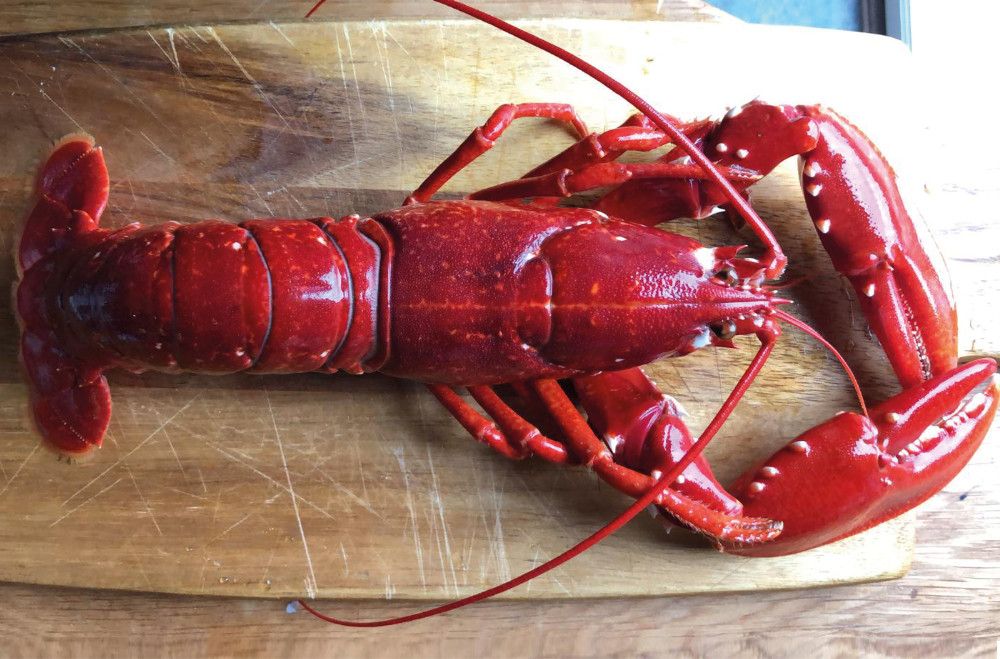
Many of us who live on Sweden’s west coast are passionate lobster fishermen. One of our number, Bengt Arvidsson, one of the marine surveyors who frequently inspects the yachts that we broker, is one of them. Another is one of our longstanding clients, Anders Pettersson. In our family, it is my partner Doreen who is the driving force behind our lobster fishing, also inviting friends and children to come along with us. We fish close to shore using our little boat, which is just over four meters long with a 20hp outboard engine. We usually fish in the waters around Ellös, a 10-minute boat ride away, passing the Hallberg-Rassy shipyard on our way out to the fishing grounds.

^ Magnus and Doreen driving to pick up the traps
When the September winds begin to feel colder and the morning mist settles over the water, you know that the Lobster Premiere is approaching. For many people along Sweden’s west coast, this is one of the highlights of the year. Lobster fishing is not only about catching an exclusive delicacy, but also a tradition deeply rooted in life along the Bohuslän coastline.

^ Morning mist over Käringön
Lobster fishing on the Swedish west coast has been going on for literally centuries. History tells us that as early as the 16th century, lobsters from Bohuslän were exported to the Royal courts and exclusive restaurants across Europe. The Swedish west coast lobster was considered something truly special thanks to the cold and clean waters of Skagerrak and Kattegat and so it quickly became an important source of income for many coastal communities. Every autumn fishermen from small villages along the coast gathered to set their traps.
The tradition is still alive today. For those of us who fish, the experience itself is just as important as the catch. Being out on the water, enjoying the weather, the sea, the community spirit, and the excitement of pulling up the traps.

^ HR50 sailing close to the lobster area | Photo © Magnus Rassy
The lobster fishing season officially begins at 07:00 on the first Monday after September 20th each year. In 2026, this means the season starts on September 21st.

^ Kalle holds a great lobster
For us, Opening Morning usually begins early. The trip toward the fishing grounds around Ellös is short, but the feeling that the season has arrived makes this short journey special. As we pass the Hallberg-Rassy Shipyard on our way out, we often meet other boats heading in the same direction. There is a unique sense of fellowship out on the fjord on these mornings and everyone shares the same experience.

^ Another great catch! | Photo © Anders Pettersson
Today lobster fishing is carefully regulated to protect the lobster stocks and to ensure that future generations can continue the tradition. The rules are strict and respected by most fishermen.

^ Max learning to be a lobster boat driver

^ Sam and Max pulling up a trap
When fishing for lobster, only lobster traps may be used. The traps themselves must also meet detailed construction requirements. Each lobster trap must have at least two circular escape openings with a minimum diameter of 60 millimetres so that the smaller lobsters can escape. In addition, every trap must contain special escape panels designed to prevent ghost fishing so that if a trap is lost on the seabed, lobsters and other marine animals must be able to escape. For that reason, the escape opening is secured with untreated cotton twine that naturally decomposes over time. It is a simple but effective solution that makes a real difference for the marine environment.

^ Bengt Arvidsson’s friend with a huge catch | Photo © Bengt Arvidsson
Recreational fishermen can set a maximum of six lobster traps per person at the same time, whilst licensed professional fishermen may set up to 40 traps. All fishing gear must also be clearly marked, with a buoy or cylinder coloured red, orange, yellow or white and clearly marked with the owner’s name and phone number.

^ Hummer cages stored on the dock | Photo © Anders Pettersson
To prevent cheating before the opening day, special restrictions apply, prohibiting any fishing with nets and traps within the lobster fishing areas in Skagerrak and Kattegat one week before the Premiere.
Another important regulation concerns lobster size. The minimum legal size is 9 cm measured from the rear edge of the eye socket to the rear edge of the carapace, known as the carapace length. Any lobster smaller than this must be returned immediately to the sea.

^ Berthon’s showing dock, used for our lobster boat in the autumn
It is also forbidden to keep egg-bearing females. If a lobster carrying external eggs is caught, she must be released immediately. Protecting these females is obviously essential for maintaining healthy lobster stocks. Quite often, large and beautiful female lobsters must be released, but for most of us this is simply part of responsible fishing. Without these rules, lobster fishing will for sure not survive in the long term. During certain periods in the past, lobster stocks along the west coast declined alarmingly which has led to increasingly strict regulations.

^ Black lobster | Photo © Anders Pettersson
Researchers and authorities now actively monitor the lobster population and study how climate change, environmental factors and fishing pressure affect the species. Our waters are changing and those of us who spend a lot of time at sea can clearly notice it.

^ Boat showing a crane for lobster traps | Photo © Anders Pettersson
For most of us recreational lobster fishermen, the lobster fishing season is about much more than the catch itself. There is something special about leaving the harbour early in the morning as the sun slowly rises above the rocky coastline or being on our boat and heading out in cold rain and strong wind conditions.

^ 1.5 kg lobster
There is an excitement you feel when the rather heavy traps finally break the surface of the water, and of course, you never know what is waiting inside. Sometimes the trap is empty, often it is full of crabs, but when you are lucky you will find a beautiful black west coast lobster – the Black Gold of the Sea. This feeling, together with the exquisite lobster dinner that follows that evening is what continues to fascinate generation after generation of lobster fishermen along Sweden’s west coast. As long as the sea continues to provide and we continue to respect both nature and the regulations, this remarkable tradition will most likely live on for many years to come.
Read Another Article
Download The Berthon Book 2026-2027 XXII (18.806MB)