Berthon UK
(Lymington, Hampshire - UK)
Sue Grant
sue.grant@berthon.co.uk
0044 (0)1590 679 222
Berthon Scandinavia
(Henån, Sweden)
Magnus Kullberg
magnus.kullberg@berthonscandinavia.se
0046 304 694 000
Berthon Spain
(Palma de Mallorca, Spain)
Simon Turner
simon.turner@berthoninternational.com
0034 639 701 234
Berthon USA
(Rhode Island, USA)
Jennifer Stewart
jennifer.stewart@berthonusa.com
001 401 846 8404
September 28th, 2026
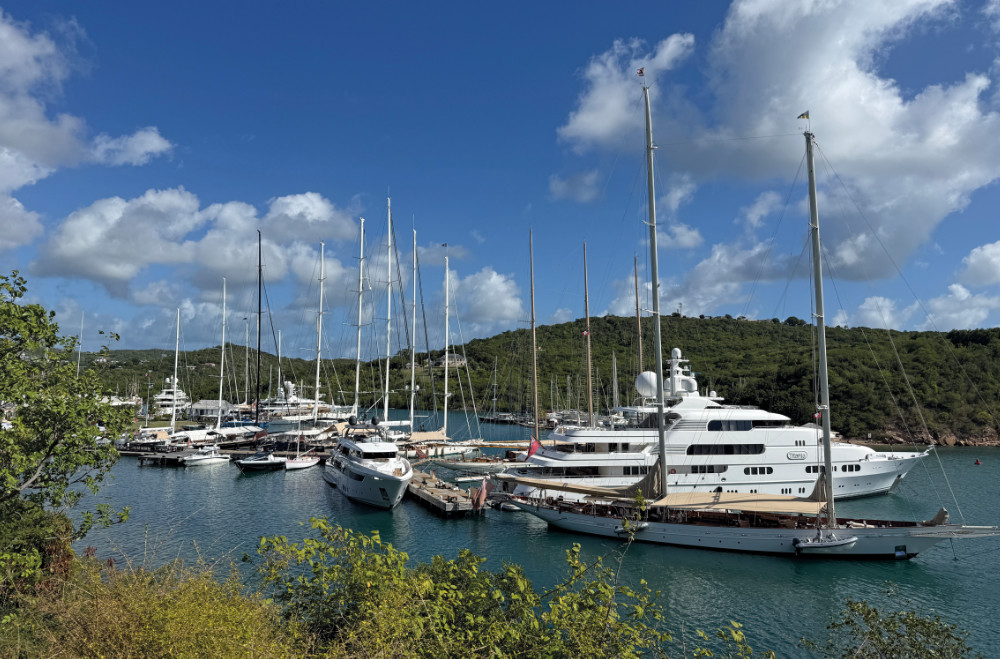
No matter how large your yacht, you can guarantee (except for that one owner!) that someone, somewhere, has a larger yacht. And whilst size isn’t everything, when it comes to surveying a yacht, size is a key factor. It determines the time and team resources needed, the systems that will need to be surveyed and the regulatory regime under which it all takes place. Within the envelope that these provide, we have to achieve flawless delivery, consistency in our work, timely delivery and a top-quality survey each and every time, forever being mindful that we are only as good as our last survey.
I’m sometimes asked how we can flip from surveying a 40 metre motor yacht to a 120 metre superyacht from week to week. My answer is that they have more in common than you might think. Each of them needs to have roughly the same list of systems for propulsion, hotel services, command and control, navigation, communications and safety. Whilst yacht designers and naval architects achieve the most amazing things on the outside, the insides are less prone to radical change, being driven by rules, convention, convenience, optimising use of space and maximising guest comfort. This means that the layout is fairly predictable. What does vary are the size and complexity of the systems, which grow with volume rather than length. This means that we work in a world in which total installed propulsion power of 40,000 horsepower, power generation capacity of over a megawatt, water production capacity of over 2 tonnes an hour and cranes that can lift 10 tonne tenders, are all commonplace. But despite the size, the survey process for every system no matter the size is the same: we inspect, we test and we benchmark performance through testing.

^ Richard at the helm
Whilst layout and fitout tend to be similar as boats get larger, the regulatory environment in which they have to operate goes through a series of step changes as they grow, especially when the intention is to operate the yacht commercially. The first key transition is at 24 metres length (based on a measure known as length between perpendiculars which is usually less than length overall). Below this level, commercial yachts are regulated by the MCA’s Code of Practice for Small Commercial Vessels. Above this size, commercial yachts are subject to regulation by their chosen Classification Society (names such as Lloyd’s Register, RINA and ABS etc) and Flag State (countries such as Cayman Islands, Marshall Islands, Malta etc). These comprehensively determine the build and operation of the yacht and require routine annual surveys and major 5 year renewal surveys. It is probably due to this step change in regulatory complexity that we see very few commercial yachts above 24 metres but below 40 metres; the additional time and cost have to be justified by a significant enough increase in space and amenity.

Once beyond the 24 metre transition, the next major transition point happens at 500 gross tonnes (usually at around 50 metres LOA), at which point rules for build and operation of the yacht step up to another level, and again at 3,000 gross tonnes (usually at around 80 metres LOA), at which point the rules no longer see a yacht but a small ship, with yacht qualifications for crew no longer recognised. The other interesting transition point is the number of guests (defined as those not on the crew list or contracted to either the Owner or the Charterer) which is limited to 12 for any large yacht in all circumstances, unless the yacht is built to be a passenger yacht, in which case she can carry up to 36 guests. The added cost and complexity of building to the passenger yacht code explains why it isn’t uncommon to see 100 metre plus yachts with accommodation for just 12 guests. Although I shouldn’t generalise, the larger the yacht, the easier they are for us to survey. Although this may seem counter intuitive, all those layers of regulation and oversight mean that there’s a form of quality control that is missing or less rigorous in smaller yachts.

Despite the enormous size and complexity of some of the yachts that we survey, with iconic yachts whose values run into the hundreds of millions of Euros, there will still be issues, and our challenge is to structure a rigorous survey process that will unearth them through a process of inspection, testing and enquiry. Survey times vary between 3 to 4 days for a 50-metre yacht with a team of 2 or 3 surveyors, to 5 days for a 100-metre yacht with a team of 5 or 6 surveyors. Our team are a multidisciplinary mix of deck, engineering and interior, all of whom have worked at sea on similar yachts. On top of this, we’ll engage any number of specialists to do a deep dive on the main engines, gearboxes and generators, electrical systems, noise and vibration and paint, so we could be as many as 10 to 12 onboard. This places enormous demands on crew resources, so the team focuses on being quick, efficient, professional and polite at all times. We never lose sight of the fact that although we’re surveying the most amazing bits of hardware, the success of the survey often comes down to the people, and in particular, our ability to rapidly build a rapport with the crew. We find that sitting down for a coffee and a chocolate Hobnob in the crew mess on the morning of the first day pays enormous dividends during the survey. Although we have to take what comes, a happy and helpful crew makes for a quick and enjoyable survey.
In terms of structuring a survey, we think of the survey in 3 stages: the in-water survey, the sea trial and the underwater hull survey. We usually recommend arranging the sea trial on day 2, so that we have had a chance to get to know the yacht and the crew, and for the haul-out to be at the end of the survey, as (a) if the sea trial is a disaster, it may not be too late to avoid the haul-out costs and (b) if there are shipyard delays with the haul-out (imagine putting a 100 metre plus yacht into dry dock) then it doesn’t derail the rest of the survey process, which runs to tight deadlines.

The sea trial is the crux of the whole survey. We usually request a minimum of 4 hours from port entrance to port entrance which provides enough time to complete our sea trial protocol. We increase this to 8 hours if we have the noise and vibration experts onboard. Our aim for the sea trial is to take the yacht to the edges of her normal operating envelope in order to test performance and reliability. The tests will include an hour at full power on the main engines, which is usually enough time to bring any problems to light. The tests will also include turning circles and zig-zag trials in order to test the effectiveness of the steering and the stabilisers, and to ensure that there are no abnormal vibrations coming from the rudders or the propulsion drivetrain. In short, we test every system onboard to ensure that it is performing as it should. Writing this article and remembering doing 28 knots on a 97-metre motor yacht with a rooster tail at the back and burning 3 tonnes of fuel an hour, the sea trial is absolutely my favourite part of the survey!
Assuming that the survey goes well (which isn’t always the case, and we have sometimes been pulled off mid survey and were actually towed back to port on one occasion) and we step off the yacht on the final day, then the hard work really begins. Throughout the survey, the team have been taking notes and photos and populating our survey software system. Our challenge is to turn all the information gathered into a detailed, well argued, clearly written final report, which provides solutions and cost estimates for the issues that we have identified, all within 3 days, which is our contractually allowed reporting timeframe, whatever the size of the yacht. Considering that our final reports can run to as many as 400 pages, this is a major task, but one that our systems and team are well used to.

Earlier I mentioned that relationships with the crew are critical to the success of the survey. This is also true of the relationship with the buyer and the buyer’s broker, for whom we provide daily updates, preliminary reports, and when the final report is submitted, calls to discuss key issues. Our reports are accompanied by prioritised work lists with cost estimates, highlighting issues that we class as defects within the definition of the MYBA contract, which feeds the negotiation process between lawyers on the two sides of the deal.
If what I’ve described above sounds like a mammoth task, you’d be right. So why we do it? Perhaps there’s some ego; it is certainly always a pleasure to see a transaction that we’ve been working on announced in the yachting press, and to know that we’ve had an opportunity to get to know the yacht and her crew. Perhaps there’s an enduring fascination in being involved with these beautiful and technically amazing yachts. Perhaps it is appreciating the trust that is put in us by our clients, and the pleasure in the relationships that we develop with brokers, crew and principals. Perhaps it’s the pleasure in being a little cog in the wheel of this crazy niche industry. As I said at the start of this article, we’re only as good as our last survey, so eventually it comes down to the pleasure of a job well done. Here’s to the next survey!
Read Another Article
Download The Berthon Book 2026-2027 XXII (18.806MB)