Berthon UK
(Lymington, Hampshire - UK)
Sue Grant
sue.grant@berthon.co.uk
0044 (0)1590 679 222
Berthon Scandinavia
(Henån, Sweden)
Magnus Kullberg
magnus.kullberg@berthonscandinavia.se
0046 304 694 000
Berthon Spain
(Palma de Mallorca, Spain)
Simon Turner
simon.turner@berthoninternational.com
0034 639 701 234
Berthon USA
(Rhode Island, USA)
Jennifer Stewart
jennifer.stewart@berthonusa.com
001 401 846 8404
April 20th, 2026
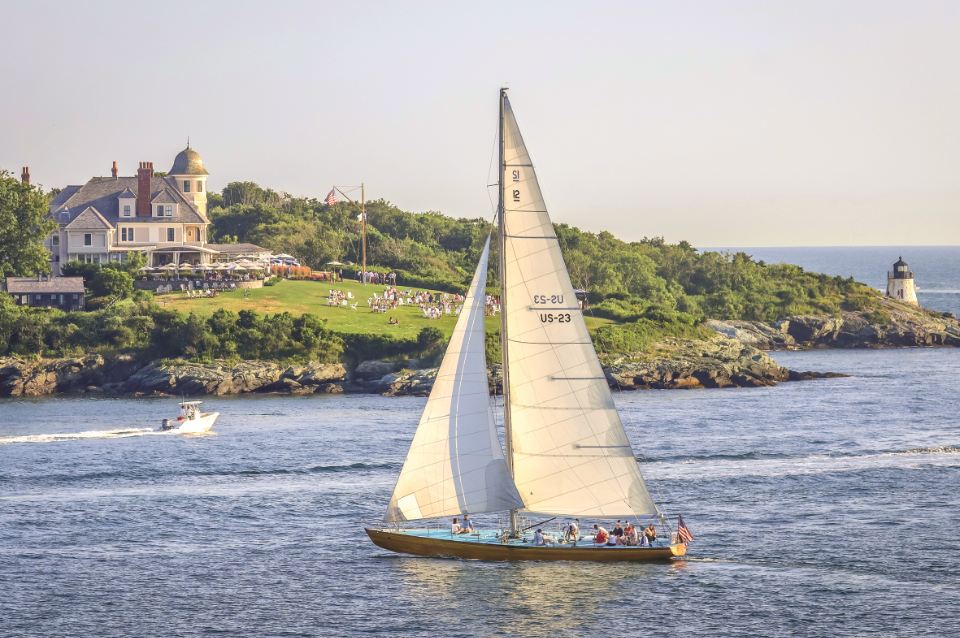
NEWPORT, RHODE ISLAND, USA
We now live in the age of the Tariff, due on anything imported into the USA that was not manufactured there, whether it’s a paper clip or indeed a yacht. The world has been scrambling to understand the new rules and amongst the planet’s head scratchers, are the yachting industry.
Of course, the Supreme Court ruling in February cancelling the tariff arrangements in place means that this scribe is in a terrible pickle as it was drafted pre-ruling. We have tried to be current but please do remember that we are yacht brokers and not tariff sayers… At the time of the very last re-write, Tariffs across the board are 15%.
Promised for some time, it was nevertheless a shock when this new regime was announced by President Trump and we, as well as many other yacht brokers, lost sales as significant sums were added to sales in progress, tightly negotiated with American buyers wanting to import their new yachts into the USA to sail in American waters.
As this policy is not set in stone (you can say that again!), and as preferential trade agreements ebb and flow, the rates will surely change. The only absolute at the time of writing is that if a yacht has been imported correctly into the USA by a previous owner with all import duties and Tariffs paid, a new owner can bring her back to the USA, where she is considered to be domestic goods, without paying the duties and Tariffs again. It is not a cascade tax. It is a one-time tax on the importation of the yacht.
Initially, US import Tariffs varied depending on the country of origin, but this is now all change. The new rate has risen from 10% to 15% across the board. Previously the base rate was 10% plus retaliatory rates, meaning that totals could vary enormously, from around 10% for the UK to over 50% in China with many other rates in between.
The yacht is charged not in connection with the nationality of her owner, or her flag, but dependant on where she was built. Today it is the same rate wherever she was built outside the USA.
Since Tariffs became part of life, the yachting industry has been looking at how to manage this hurdle as effectively as possible. Any of these options should be checked by a US Maritime lawyer and customs broker before you dive in. The rules are not straight forward and the goalposts move at an alarming rate. They will be informed about changes to the Tariff regulations and about changing trade agreements.
There are other options for owning and using your yacht in the USA as an American national.
This is where a yacht is registered with the flag of a country like the Cayman Islands, Marshall Islands, Bahamas or Malta. Once you have your flag you are able to apply for a USA Custom and Border Protection (CBP) cruising permit. This allows you to use your yacht in USA waters for up to a year. You cannot charter her, and you must leave USA waters with her for more than fifteen days every year. You can’t sell her to a USA resident whilst she is in USA waters.
This is of course the easiest option as she does not attract any Tariff at all. This new Tariff scheme was brought in to encourage the purchase and use by USA citizens of domestically built products.
If you buy a yacht that has already cleared USA Customs and has paid her duties means that Tariffs do not apply to her.
By using one of these free trade zones in the USA, the Tariff and other taxes can be deferred whilst the yacht is displayed on the market, serviced or sold for export. Of course, this means that you cannot enjoy sailing her in USA waters under this scheme.
Another option which we are seeing happening a lot is deferred importation. Put simply, this means that you don’t bring her home to USA waters and therefore no Tariffs are due. Some American yachtsmen are doing this and bringing their boats into the USA only when they sell.
It is true to say that Tariffs have been a shot in the arm for the domestic market, as yachts built in the USA are so much cheaper than those imported from outside. Therefore, a micro market has been created which favours domestic yachts both pre-owned and new build from the USA. It means that there is less choice for the yacht buyer and we expect this trend to continue with a two-tier pricing system between USA domestic yachts and yachts in the normal international market.
Buying yachts either new or pre-owned that are not of USA manufacture, means that they are always located outside the USA. Because of the new regime, it is not particularly attractive to bring them home. This has seen Americans looking at the options of cruising and using their yachts in other parts of the world. And of course there are lots of lovely places in which to sail.
Once cruising programmes are complete, there is always the option of selling yachts where they are, on the normal international market, rather than bringing them back to the USA.
One option is the Mediterranean and other areas in the Northern part of Europe. Here they avoid VAT provided they respect local rules and observe the Schengen Rule that allows them, as USA nationals, 90 days in the area in each 180 days. The price delta between a series of aeroplane flights as against paying a Tariff on entry to the USA, makes this financially attractive although maybe less convenient.
The Caribbean is another great cruising ground. It is relatively close by and is a great place to sail and keep a yacht provided she leaves the hurricane areas in the relevant season.
And then of course there is the wonderful Southern Hemisphere. The extraordinary Pacific Ocean which covers around 30% of the Earth’s surface is also home to some magnificent cruising and amazing places to visit. In New Zealand and Australia, although local taxes must be navigated, there are great service and refit yards. This area is a very big subject and given the time, there are literally dozens of years of cruising ground to explore.
With our office in Newport, Rhode Island, we offer a good knowledge of the European market via our headquarters in the UK, and sales offices in Orust, Sweden and in Palma de Mallorca as well as via our agent in Italy. We also have good contacts in the Southern Hemisphere for those sailing there.
Of course, there are always irritating local regulations and taxes but as we are on the spot we can advise on these. Importantly, we are also able to unlock the secret of some of the lovely cruising on our doorstep and far beyond because of our local knowledge. We find that American clients are sophisticated buyers and have normally researched the possibilities, but we can normally help to fill in the gaps.
Because we have a local office in the USA we can help with sales transactions outside the USA easily. We have often said that we are experts in yacht arbitration across the Atlantic, but with Tariffs this has now extended to offering the option of glorious cruising in areas which American clients may not have considered before, all of which are Tariff free.
Returning to yachting in the USA for Americans, Tariffs aside, there are other taxes on importation of which to be aware. There are two main types of tax, the first being federal import duty and then a state level tax or usage tax which varies significantly from state to state.
The standard duty rate is typically 1.5% of the yacht’s value and this can be paid on a valuation using a customs agent.
For the state taxes (sales and usage tax), once the federal duties have been settled, the yacht becomes a USA domestic good. The owner then needs to observe the laws of the state where the yacht is based and sailed. State sales tax is normally collected when a yacht sells, whilst the usage tax is charged if the yacht is bought elsewhere and then brought into a specific state to be kept and used there.
The tax structures in operation amongst the states can vary enormously. As with Tariffs, the rates and rules do change, so whilst we have tried to be accurate at the time of writing, these do alter, so please do always check.
Some states have caps on the tax that they charge so that there is a maximum that they will charge you. This is regardless of the yacht’s total value. The higher value the yacht, the more attractive the state becomes.

There are some states that don’t charge sales tax at all; Delaware and of course our home in the USA, Rhode Island.
You may also find that there is a personal property tax in some states which varies from state to state and local municipality.
It is all somewhat of a moving target and so it is super important to take professional advise before importing a yacht into USA waters to make sure that you know what you’re in for before she arrives. By doing so you can ensure that your yachting in home waters is a joy rather than an expensive hassle.

Fortunately, we all inhabit a planet, 71% of which is covered with water so there are an enormous number of cruising grounds to explore and to dive into internationally. We are excited by the possibilities for international cruising and are always happy to chat about the options.
For those who prefer cruising in American waters, there is some comfort in the fact that the domestic market is now occupied with yachts with good residual values and good levels of demand as they have paid all their taxes, and that does not change.
Spreadsheets are a lot less fun than diving into the possibilities of cruising, exploring and roaring around as you prefer. For further information about this fast, moving target, please do contact Berthon USA.