Berthon UK
(Lymington, Hampshire - UK)
Sue Grant
sue.grant@berthon.co.uk
0044 (0)1590 679 222
Berthon Scandinavia
(Henån, Sweden)
Magnus Kullberg
magnus.kullberg@berthonscandinavia.se
0046 304 694 000
Berthon Spain
(Palma de Mallorca, Spain)
Simon Turner
simon.turner@berthoninternational.com
0034 639 701 234
Berthon USA
(Rhode Island, USA)
Jennifer Stewart
jennifer.stewart@berthonusa.com
001 401 846 8404
April 20th, 2026

For many yacht owners, moving from a smaller vessel to a larger yacht is an exciting and natural progression. More space, greater range, and the ability to enjoy time on the water with ease are all part of the appeal. Yet despite the enthusiasm, one concern consistently makes owners pause: the idea that employing crew will be complicated, restrictive, or difficult to manage.
In reality, this perception is rarely based on experience. More often, it is shaped by fragmented advice, second-hand stories, and a lack of clear guidance. When approached properly, employing crew on a larger yacht is not only straightforward but also one of the most rewarding steps an owner can take.

Owners new to professional crew often feel overwhelmed before they even begin. The yachting industry is full of opinions, and advice from other owners, brokers, crew, and online sources can feel contradictory. Add to that concerns about employment responsibilities or the fear of losing control over how the yacht is run, and it is easy to see why the process feels daunting.
What is often overlooked is that yacht ownership has always relied on specialists. Technical management, legal compliance, building teams, and refit yards all exist to simplify ownership. Crew recruitment is no different. Owners are not expected to become experts in employment law or industry structures; they are supported by professionals who provide clarity and remove unnecessary complexity.

The most significant shift when stepping up to a crewed yacht is not operational, but experiential. On smaller yachts, owners are often deeply involved in her day-to-day operation, managing maintenance, coordinating logistics, and dealing with issues as they arise. While this can be rewarding, it also requires time and mental space.
A professionally crewed yacht changes that dynamic entirely. The owner’s role shifts to direction rather than execution. Expectations are set, preferences are communicated, and the crew takes responsibility for delivering a yacht that is ready to be enjoyed. Rather than feeling removed from the experience, owners often feel more connected to it, as their time on board is no longer dominated by practical concerns.

There is a common misconception that crew will be intrusive or overly formal. In practice, the opposite is true when recruitment is handled correctly. Good crews are intuitive, discreet, and highly attuned to the owner’s lifestyle. They know when to be present and when to step back, making sure that the yacht remains her owner’s personal space rather than a commercial environment.
Professional crew maintain the yacht proactively, manage safety and navigation, and ensure that every detail is taken care of before it becomes a problem. The result is consistency and peace of mind. Owners arrive at a yacht that is prepared, maintained, and ready for use, without needing to intervene.

One of the biggest misconceptions when stepping up is that a larger yacht automatically requires a larger crew. In reality, crew numbers are determined by how the yacht is used, not simply by her length. Layout, onboard systems, cruising plans, and owner expectations all play a role.
For many owners transitioning from smaller yachts, a streamlined crew structure works exceptionally well. A captain provides leadership, safety oversight, and operational management. A steward or stewardess manages the interior, guest service, and provisioning, while a deckhand or mate supports exterior maintenance and deck operations where required. This approach delivers efficiency without excess and can be scaled as needs evolve.
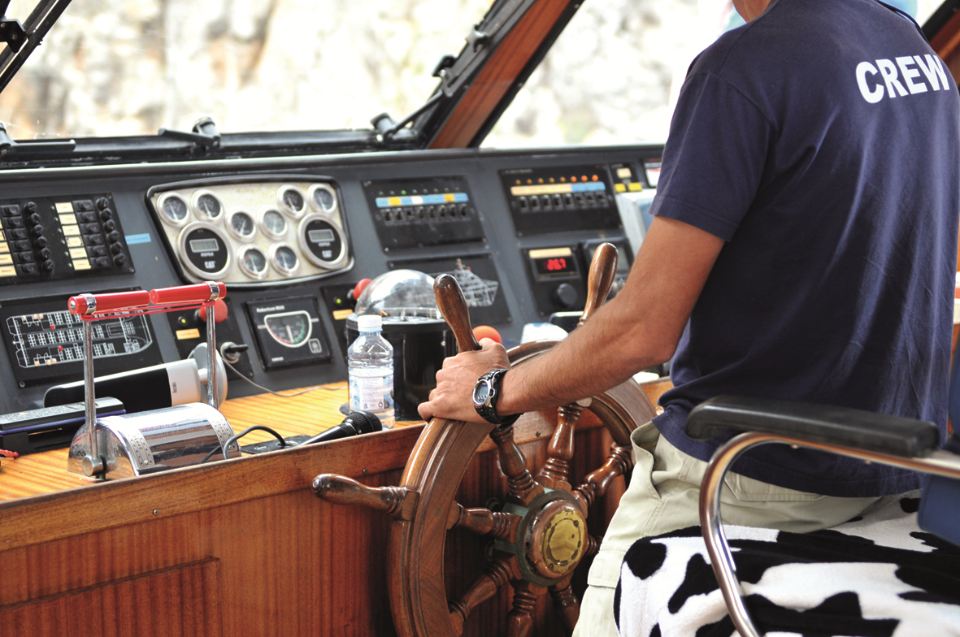
For first-time employers, the idea of hiring crew can feel unfamiliar. However, when the process is properly structured, it becomes both clear and manageable. Professional recruitment ensures that roles are well defined, salaries are benchmarked accurately, and employment contracts reflect both industry standards and owner expectations.
Trial periods allow owners and crew to confirm that the relationship is the right fit, and ongoing support ensures that small issues are addressed before they become larger ones. Owners remain informed and in control without having to manage the administrative details themselves – those ready to take the next step can hire yacht crew through Bespoke Crew directly.

The difference between an enjoyable ownership experience and a stressful one often comes down to recruitment. Crew are not interchangeable. Personality, communication style, and cultural alignment matter just as much as technical competence. When the right match is made, the yacht retains her identity and feels like a true extension of the owner’s lifestyle.
This is where experience matters. Effective recruitment is not about filling positions quickly, but about understanding how an owner uses their yacht and selecting individuals who will enhance that experience rather than complicate it.

Crew costs are frequently perceived as unpredictable, yet in reality, they are highly transparent when planned correctly. Salaries, rotations and employment structures can be clearly defined from the outset – the yacht crew salary guide provides a useful benchmark for owners planning ahead. This allows owners to budget with confidence. Seasonal and permanent options provide flexibility, and professional guidance ensures there are no unexpected obligations.
Most owners find that the value the crew brings far outweighs the cost. Time saved, stress reduced, and enjoyment increased are benefits that quickly become indispensable.
After their first season with a professional crew, owners consistently express the same sentiment: the transition was far easier than expected. The yacht is always ready, time on board is genuinely relaxing, and the ownership experience feels elevated rather than complicated.
Moving to a larger yacht with crew is not a leap into the unknown. It is a considered step, best taken with the right advice and support. When done properly, crewing is not an added burden; it is the key to effortless ownership.